Best 3D Printers for Functional Parts & Prototyping
Functional parts need to survive real-world use — brackets that hold weight, enclosures that handle heat, gears that mesh under load. The printer matters less than the material, but you need a printer that can handle engineering materials like PETG, ABS, nylon, and carbon fiber composites.
In a hurry? Our top picks:
What to look for
Material range
An enclosed printer with 300°C+ nozzle temp opens up ABS, ASA, nylon, PC, and carbon fiber composites.
Build volume
Functional parts are often larger than decorative ones. A 250mm+ cube handles most projects without splitting into multiple prints.
Dimensional accuracy
Parts that need to fit together or interface with existing hardware require consistent dimensional accuracy.
Enclosure
Required for ABS, ASA, nylon, and PC. Without it, warping makes these materials unprintable.
Quick comparison
| Printer | Build Volume | Max Speed | Tech | Price |
|---|---|---|---|---|
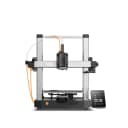
| Anycubic Kobra 3 V2 | 255×255×260mm | 600 mm/s | FDM | $229 |
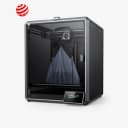
| Creality K1 Max | 300×300×300mm | 600 mm/s | FDM | $649 |
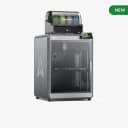
| Creality K2 Plus | 350×350×350mm | 600 mm/s | FDM | $899 |
Our picks
Budget ($200-400)
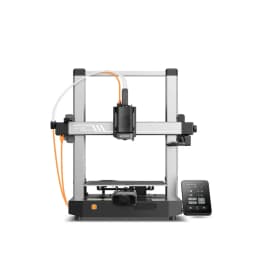
Anycubic Kobra 3 V2
$229
$349
- • $229 — Anycubic Kobra 3 V2
- • Fast: up to 600 mm/s
- • Auto-leveling for hassle-free setup
- • Multi-color via ACE Pro
Mid-range ($400-700)
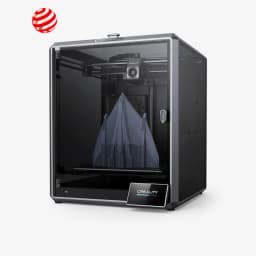
Creality K1 Max
$649
$899
- • $649 — Creality K1 Max
- • Fast: up to 600 mm/s
- • Enclosed for ABS/ASA and quieter printing
- • Auto-leveling for hassle-free setup
Professional ($700-1500)
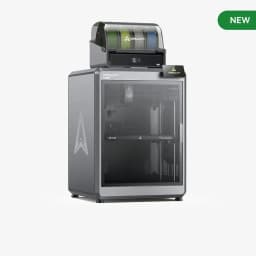
Creality K2 Plus
$899
- • $899 — Creality K2 Plus
- • Fast: up to 600 mm/s
- • Enclosed for ABS/ASA and quieter printing
- • Auto-leveling for hassle-free setup
Common mistakes to avoid
- ×Printing functional parts in PLA — it deforms above 60°C and is brittle under impact
- ×Not accounting for print orientation — layer lines create weak points perpendicular to the layers
- ×Using 100% infill when 40-60% with more walls is stronger and faster
- ×Forgetting to add dimensional tolerances — 3D printed holes are always slightly undersized